
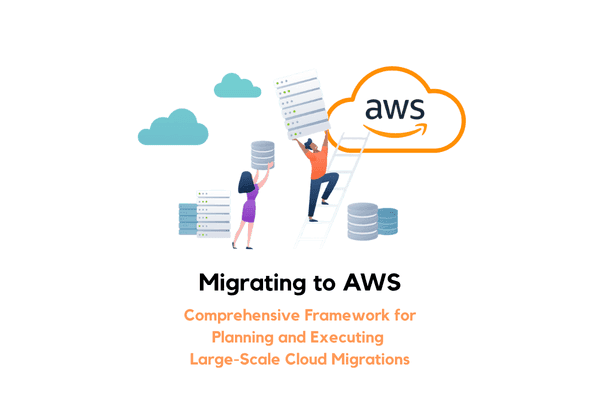
Migrating to AWS
Field | Description |
Purpose | To provide a comprehensive framework for planning and executing large-scale cloud migrations, moving from initial business case and portfolio discovery to technical execution and post-migration optimization. |
Audience | Technical and project leads responsible for transitioning legacy on-premises workloads to the AWS Cloud environment. |
Role | Solutions Architects, Software Engineers, IT Project Managers, and Operations Leads. |
Domain | Cloud Migration / IT Modernization / Infrastructure. |
Skill Level | Intermediate. |
Style | A structured, process-oriented approach combining strategic planning with hands-on labs focused on discovery tools, migration execution, and validation. |
Duration | 3 Days. |
Related Technologies | AWS Application Migration Service (MGN), AWS Migration Hub, AWS Discovery Service, and the 7 Rs Migration Strategy. |
Course Description
Migrating to AWS is designed for individuals who need to plan and execute the transition of existing workloads to the AWS Cloud. This course covers the entire migration lifecycle, starting with recognizing business drivers and assessing organizational readiness. You will dive deep into the technical phases of migration, including portfolio discovery, application design, and the actual "cutover" process. Through hands-on labs, you will practice using AWS migration tools to perform real-world moves, followed by post-migration validation to ensure applications are optimized for the cloud's performance and cost-saving capabilities.
Who is this course for
This course is intended for those involved in the high-stakes process of moving data and applications:
Solutions Architects and Engineers who need to design the target architecture and select the right migration tools.
IT Project Managers who need to understand timelines, stakeholders, and the three phases of migration.
Operations Leads tasked with maintaining business continuity during and after the transition.
Course Objectives
Strategy & Drivers: Recognize common business/technical drivers and distinguish between migration strategies (Rehost, Replatform, Refactor, etc.).
Process Management: Summarize the three phases of migration and identify the objectives and stakeholders for each.
Discovery & Planning: Discover a portfolio, gather necessary data, and determine an organization's migration readiness.
Execution: Plan, design, and perform application migrations using AWS best practices and architecture patterns.
Validation & Growth: Validate successful migrations and optimize applications and operations in the post-migration phase.
Prerequisites
Cloud Foundation: Completed AWS Technical Essentials or Architecting on AWS.
Technical Experience: Familiarity with enterprise IT infrastructure (hardware and software).
Certification (Optional): AWS Certified Solutions Architect – Associate is highly recommended to get the most out of the architectural discussions.
Course outline
Section 1: What Is a Cloud Migration?
Drivers and outcomes of a cloud migration
Planning for a successful cloud migration
The three-phase migration process
Section 2: Assessing Migration Readiness
The assess phase
Cloud readiness assessment tools
Examine your IT landscape and build your business case
Group Lab: The Cloud Adoption Tool (CART)
Section 3: Preparing for a Migration and Understanding Related Workstreams
Mobilize phase
Migration-related workstreams
Section 4: Discovering Landing Zones and Their Benefits
What is a landing zone?
Custom multi-account structure with AWS Organizations
AWS Control Tower
Customizations for AWS Control Tower (CfCt)
Planning for connectivity
Section 5: Building a Landing Zone
Lab: Connecting Your On-Premises Network and Directory Services to AWS
Planning a landing zone
Design a multi-account structure
Governance polices
Planning for connectivity
Demonstration: AWS Control Tower
Section 6: Discovering the Portfolio and Understanding Migration Strategies
Detailed portfolio discovery workstream
Evaluating cloud readiness
Cloud migration strategies
Group Lab: Choose a migration strategy (scenario-based)
Section 7: Understanding and Choosing Portfolio Discovery Tools
Lab: Gathering Application Data Necessary for Migration
Migration Evaluator
AWS Migration Hub and AWS Application Discovery Service
AWS Systems Manager and Amazon CloudWatch
Section 8: Planning and Designing a Migration
Plan the migration overall
Building the migration factory
Design the migration for each application
Group Lab: Build a migration plan
Group Lab: Design for migration
Section 9: Performing the Migration to AWS
Lab: Migrating an Application to AWS
Server migration process
Server migration tools
VMware Cloud on AWS
AWS Migration Hub
AWS Application Migration Service (AWS MGN)
Evaluating server migration tools
Section 10: Understanding Database and Data Migration Services
Lab: Migrating an Existing Database to Amazon Aurora
Data migration
Online data migration services
Offline data migration services
Database migration
Section 11: Understanding Additional Migration Support Options
AWS Managed Services
AWS Service Catalog
AWS Service Catalog integrations
Microsoft workloads on AWS
SAP on AWS
Section 12: Integrating, Validating, and Cutting Over Applications
Migrate and modernize phase
Cutover strategy
Section 13: Modernizing and Optimizing Applications
Lab: Optimizing an Application with Amazon S3 and Amazon ECS
Cost optimization
Performance optimization
AWS tools used to optimize
Modernize the enterprise
Use containers
Use serverless architectures
Section 14: Understanding Operations Tools, Integration Testing, and Automation
AWS Config
Infrastructure and operations as code
Adopting a DevOps approach
Automate change and configuration
Automate management
Section 15: Migration Best Practices
Lab: Automating Application Deployments
Course review
Best practices
Continue your learning